Custom squishy development
Build the brief before you build the sample.
A strong sourcing conversation is not just a photo and a price target. It lets the product team review the intended use, the product route, packaging and destination-market requirements before it gives you a project-specific quote.
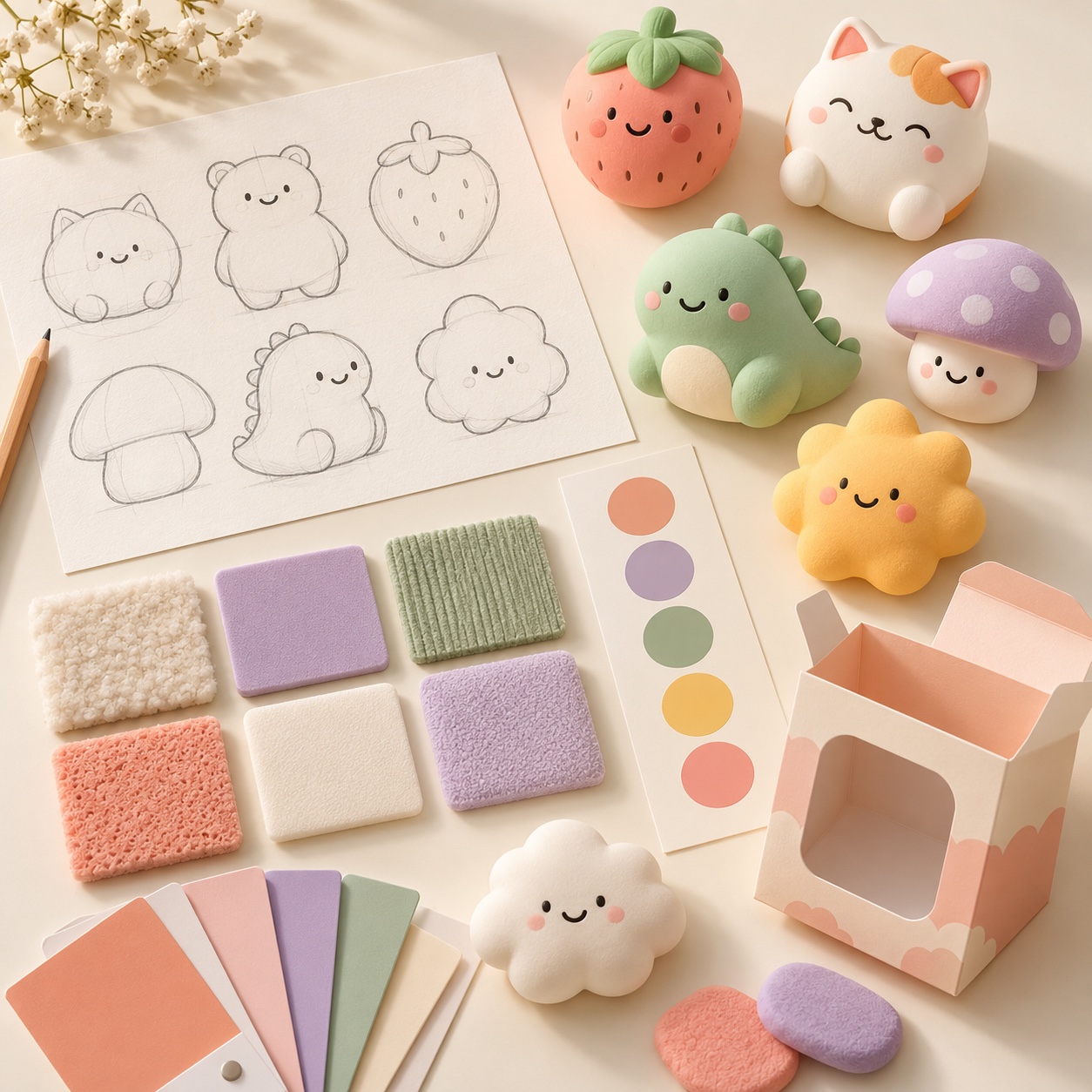
01 / Choose the right route
Three ways to start a product conversation.
You have the product direction.
Bring original artwork, a licensed character or a well-defined reference. The conversation focuses on feasibility, material direction, artwork handling, packaging and the sample scope.
You have the audience and the idea.
Begin with the target customer, intended use and desired feeling. Shape, construction, visual language and packout need to be developed as a project—not copied from a competitor.
You want a branded assortment route.
Start from a suitable form direction, then align logo treatment, colors, labels, display format and quantity. Availability and minimums are confirmed by the final specification.
02 / The buyer checklist
Six inputs that make a quote useful.
- Customer and use case.Who is it for, how will it be used, and what age grade applies?
- Original reference.Share your own sketch, approved artwork, moodboard or licensed asset. Confirm you have the right to use any character or logo.
- Hand-feel objective.Describe the visual, surface and handling experience you are targeting. Material and construction cannot be assumed from a generic photo.
- Market and labels.Name the destination country or region, intended age grade, warnings and testing requirements that must be reviewed for the exact project.
- Packaging route.Explain whether the product needs a bag, card, color box, display, insert, barcode or retail-ready presentation.
- Quantity and timing.Share the expected first order, future reorder potential and launch window. MOQ, sample scope and delivery plan are then quoted for the approved construction.
03 / What gets confirmed
Move from direction to a written scope.
Identify unknowns in the artwork, size, use, packout and market requirements.
Match the product route to the final detail level, construction, quantity and commercial terms.
Define the appearance, finish, packout and review points that need sign-off for the project.
Confirm the approved specification, quality checkpoints, testing scope and shipment plan in writing.
Important: the site does not represent a universal MOQ, fixed delivery time, automatic certification, test result or approved production sample. Those items depend on the selected product and destination and must be confirmed for your project.
04 / Quick answers
Questions buyers ask before requesting a custom quote.
Can I start with only a concept?
Yes. A short description, the intended customer, a visual direction and an expected quantity are enough to start a feasibility conversation. Be clear about what is still undecided.
Can product references be copied exactly?
No. References can communicate the kind of format or experience you want, but the resulting project should use original or authorized intellectual property and its own product direction.
When should I mention compliance?
At the beginning. The destination market, age grade, warning labels and any testing requirements shape the project scope and should be confirmed for the exact product.